Check car history in Ireland: the complete 2026 guide
Check car history in Ireland: the complete 2026 guide ! Man checking car history online at home Buying a used car in Ireland without checking its history is one of the costliest mistakes you can make.

Buying a used car in Ireland without checking its history is one of the costliest mistakes you can make. A used car can carry hidden history that is invisible on a test drive: a previous write-off, tampered mileage, or outstanding finance still owed to a lender. Citizens Information advises buyers to ask about the history of the car and the number of previous owners before committing. A thorough car history check covers:
- Vehicle identity verification: confirms the VIN, registration, and make match official records
- Finance status: reveals whether a lender still legally owns the car
- Write-off and scrap history: flags Category A, B, S, or N write-offs from Irish and UK insurers
- Mileage verification: cross-references NCT records and service history for inconsistencies
- Ownership history: shows how many previous owners the vehicle has had
- Accident and damage records: surfaces insured collisions logged with Irish and UK databases
- NCT and tax validity: confirms current roadworthiness and tax status
- Recall information: identifies any outstanding manufacturer safety recalls
- Import and grey-market status: checks whether the car was previously registered in the UK or Northern Ireland
Reputable providers connect directly to the National Mileage Register and official finance databases, which is what separates a reliable report from a free, incomplete one.
How to check car history in Ireland: a step-by-step process
Follow these steps before you hand over a single euro.
-
Locate the VIN and registration plate. The Vehicle Identification Number sits on the driver’s side dashboard and on the vehicle’s registration certificate (V5C or Irish log book). You need this to run any report.
-
Check vehicle identity first. The report should confirm the VIN, engine number, and colour match the log book. Discrepancies here are an immediate red flag for a cloned or stolen vehicle.
-
Review the finance status. A car with outstanding finance is legally owned by the lender, not the seller. If you buy it, you could lose both the car and your money. Never skip this step.
-
Examine write-off and scrap records. Look for any Category A or B write-offs, which indicate the car should never return to the road. Category S and N write-offs are less severe but still affect value and safety.
-
Scrutinise the mileage timeline. Mileage tampering rarely shows up as a single dramatic drop. Look for “stair-stepping” patterns in NCT and service records, where mileage gaps are suspiciously uneven or illogical.
-
Check for imported or grey-market vehicles. If the car was previously registered in the UK or Northern Ireland, a premium report will cross-reference UK databases to reveal overseas write-offs or finance that would not appear in Irish records alone.
-
Review service and maintenance records. A full service history from a franchised dealer or independent garage adds confidence. Gaps in the timeline warrant direct questions to the seller.
-
Check for outstanding recalls. Enter the VIN on the manufacturer’s website or ask your provider whether the report covers open safety recalls.
-
Combine the report with a mechanical inspection. A history report captures paper records only. Minor accidents repaired privately without an insurance claim will not appear, yet they can compromise long-term integrity. Always follow up with an independent mechanic before you buy a used car.
Pro Tip: Never rely on a free car history check as your only source. Free services routinely lack access to the National Mileage Register and banking finance databases, which are the two records most likely to save you from a costly mistake.

What a complete Irish car history report must include
Reports vary enormously, and the gaps are rarely advertised. Before you pay for any check, confirm it covers every line below. A report that cannot query the finance database is not a car history check — it is a partial record that leaves your biggest risk unchecked.

| Check | Why it matters |
|---|---|
| Outstanding finance | If money is still owed, the finance company can legally repossess the car from you. This is the single most expensive thing a cheap report misses. |
| National Mileage Register | The only reliable way to spot a clocked odometer against recorded readings over time. |
| Write-off and insurance categories | Including UK categories on imports. A Category S car can look perfect and be worth a fraction of the asking price. |
| Import and previous registration status | Tells you whether the car was previously registered in the UK or Northern Ireland, which changes both its value and its motor tax table. |
| Ownership history and recorded keepers | Frequent short ownerships are a pattern worth asking about. |
| Open safety recalls | Manufacturers fix these free of charge, but only if someone books the car in. |
Breadth matters most on an imported car, where a check limited to Irish records alone could miss a Category S write-off recorded by a UK insurer. Free checks routinely lack access to both the National Mileage Register and the banking finance databases — the two records most likely to save you from a serious loss.
Ecosteer runs vehicle history checks against Irish and UK records, and for electric and plug-in cars our EV battery health check adds the one figure a standard history report cannot tell you: the true condition of the traction battery.
Ecosteer makes finding your next verified car simpler
Once you know what to look for in a history report, the next step is finding the right car to check. Ecosteer is Ireland’s modern car marketplace, where dealers list verified vehicles and buyers can filter by county, price, mileage, fuel type, and more, without the noise of oversized platforms.

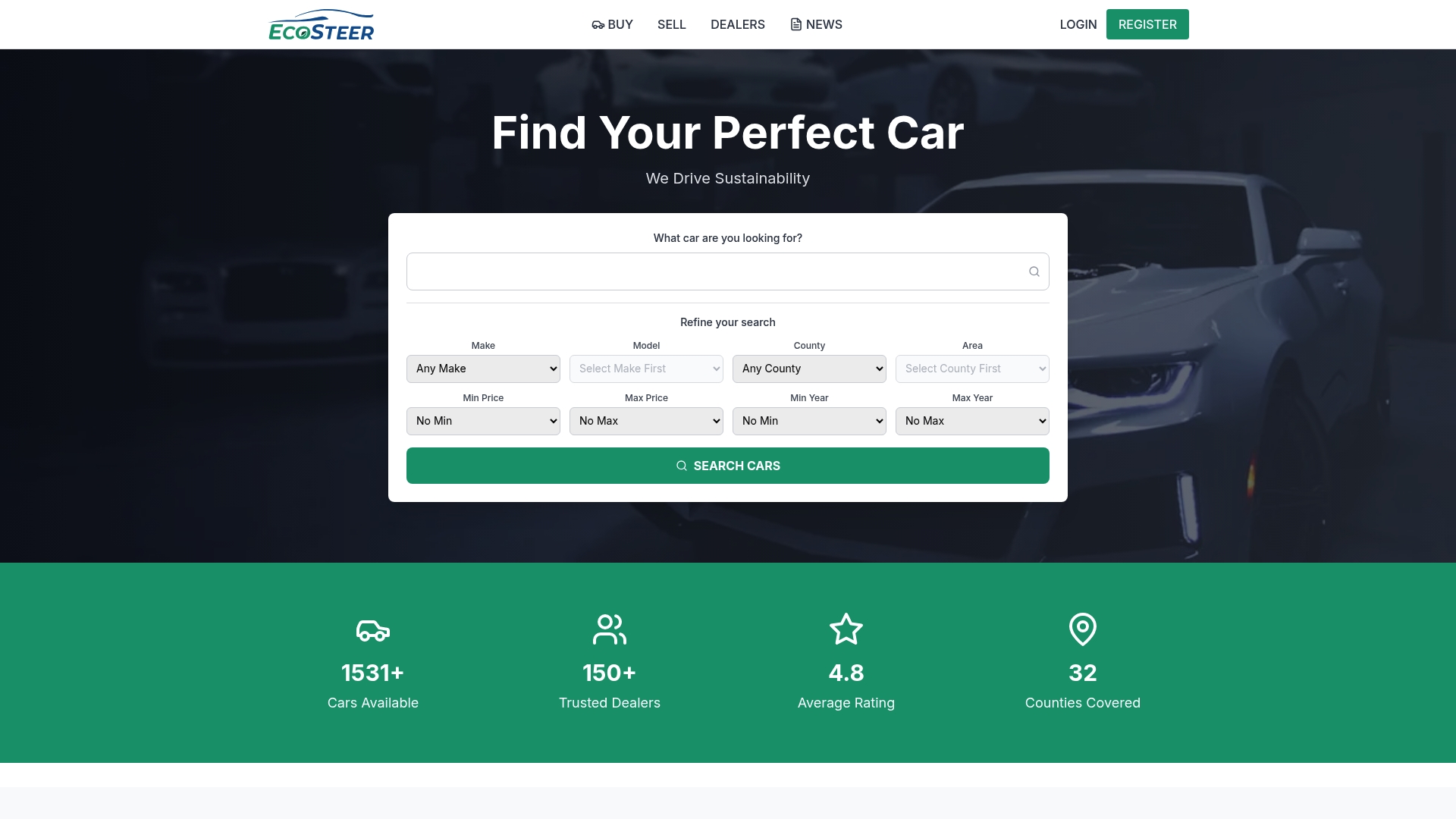
Rather than trawling through unverified private listings, you can browse cars for sale across Ireland and connect directly with dealers who provide full vehicle details upfront. Whether you are searching for a hybrid in Dublin or a family SUV in Waterford, Ecosteer gives you a clean, transparent starting point before you run your history check. Visit ecosteer.ie to start your search today.
Key takeaways
A thorough car history check in Ireland must cover finance status, write-offs, mileage records, and vehicle identity using a provider connected to official Irish and UK databases.
| Point | Details |
|---|---|
| Finance check is critical | A car with outstanding finance is legally owned by the lender; buying it risks losing both the vehicle and your money. |
| Free checks are unreliable | Free services often lack access to the National Mileage Register and finance databases, leaving key risks unchecked. |
| Mileage fraud is subtle | Look for irregular gaps in NCT and service timelines, not just a single odometer drop. |
| Imports need extra scrutiny | Cars previously registered in the UK or Northern Ireland require cross-referencing UK databases to surface overseas write-offs. |
| Ecosteer for verified listings | Ecosteer lists dealer vehicles across Ireland with detailed specs, giving buyers a transparent starting point before any history check. |
Official sources for checking a car in Ireland
- Citizens Information — Buying a used car
- Citizens Information — Change of vehicle ownership
- motortax.ie — Online change of vehicle ownership
- gov.ie — Change of vehicle ownership
- Road Safety Authority — Vehicle owners
- Revenue — Registration of imported used vehicles (VRT)
Recommended
Ecosteer Editorial
Author