Get Car Insurance Fast in Ireland, Compare Routes, Check Central Bank
Get car insurance fast in Ireland: compare sites, brokers and direct insurers, have your driver number ready, and confirm Central Bank regulation before...

For most buyers in Ireland, a comparison site or independent broker is the fastest way to see genuine price differences across the market, while a direct insurer or specialist broker suits anyone with a complex claims history or an unusual vehicle. Whichever route you choose, have your driver number, licence details, and the car’s registration or make and model ready before you request a quote. Check the insurer or broker is regulated by the Central Bank of Ireland before you hand over any payment.
TL;DR:
- Comparing quotes from multiple panels is essential for finding the best deal, especially for straightforward drivers where comparison sites are fastest.
- A broker adds value for complex profiles, such as drivers with penalty points, claims history, or unusual vehicles, and can uncover hidden rating factors.
- Providing accurate, complete information upfront, including driver number, licence details, and vehicle data, reduces the risk of incorrect quotes or invalidated cover later.
- Choosing comprehensive coverage is recommended for new or high-value cars, while third-party, fire and theft policies suit older vehicles on tighter budgets.
- Using telematics, bundling policies, and installing visible security features can significantly lower premiums, particularly for new or riskier drivers.
Table of Contents
- How comparison sites, brokers and direct insurers differ in Ireland
- What you need to get an accurate car insurance quote in Ireland
- What affects your premium: the main factors insurers use in Ireland
- Choosing cover: comprehensive vs third-party, fire and theft
- Practical tactics to reduce cost and get better quotes in Ireland
- How Ecosteer supports buyers in the insurance step of buying a car
- Author perspective: final practical recommendation for buyers in Ireland
- Ecosteer: a smoother way to buy the car behind your policy
- Sources
- FAQ
How comparison sites, brokers and direct insurers differ in Ireland
A comparison site pulls quotes from a panel of insurers in one search, so you see a spread of prices in minutes. A broker does similar legwork but adds a human who can query unusual cases, chase down cover for high‑risk profiles, and explain what a policy actually excludes. A direct insurer, meanwhile, only sells its own products, which means faster underwriting decisions but no ability to shop you around if their price is not competitive.
None of these routes is universally cheapest. Premiums vary by insurer because each underwrites risk differently, which is exactly why comparing quotes across panels matters more than loyalty to a single provider.
| Route | Speed to quote | Panel size | Best for | Transparency |
|---|---|---|---|---|
| Comparison site | Fastest, minutes | Wide, several insurers | Straightforward profiles wanting price checks | Clear on price, thinner on policy detail |
| Independent broker | Same day, sometimes next day | Wide, curated by broker relationships | Complex claims history, unusual vehicles, young drivers | High, broker explains exclusions directly |
| Direct insurer | Fast, single quote | None, one insurer only | Buyers who already know the insurer suits their profile | High on that one policy, no market view |
When should you use which?
- New or first-time drivers: start with a broker who can access young-driver schemes and telematics options you might not find on a general aggregator.
- Multi-car households: ask a direct insurer or broker about multi-policy discounts before assuming a comparison site’s headline price is the final one.
- Anyone with penalty points or a previous claim: go to a broker first. Independent brokers add real value for complex profiles, negotiating across a panel that a standard aggregator search may not reach.
Pro Tip: If your quote comes back far higher than expected and you cannot see why, call a broker rather than accepting it. A five-minute conversation often uncovers a rating factor, like an old address or an undeclared named driver, that’s quietly inflating the price.
What you need to get an accurate car insurance quote in Ireland
Insurers ask for specific information, and giving incomplete or vague answers is the single biggest cause of quotes that turn out wrong later. The Central Bank’s own guidance confirms that buyers must provide vehicle registration, driving licence information, and driving history, and that failing to disclose relevant history can affect your cover if you ever need to claim.
Before you start a quote, gather:
- Your driver number, found on your licence or via Gov, now a mandatory field for new policies.
- Full licence details, including how long you have held a full licence, not just a provisional one.
- The car’s registration number, or its make, model, and engine size if you have not bought it yet.
- Estimated annual mileage and how the car will mainly be used, commuting, social, or business.
- Your occupation, since some trades are rated differently.
- Any claims, penalty points, or convictions from the past five years.
Pro Tip: Buying before you have a registration number? You can still get a quote using make, model, and engine size, then update the registration once the sale completes. Doing it in this order avoids a scramble on collection day.
What affects your premium: the main factors insurers use in Ireland
Your age and driving experience carry the most weight. A newly qualified 22-year-old and an experienced 45-year-old with an identical car will see very different quotes, because insurers price years held on a full licence as a direct proxy for risk. Claims history and penalty points move the price in the same direction: more of either, higher the premium.
Vehicle attributes matter almost as much. A small-engine hatchback with a good safety rating and factory alarm tends to price lower than a high-powered performance car or anything commonly targeted for theft. Where you live and how far you drive also shift the number. Dublin postcodes with high traffic density and theft rates typically cost more to insure than a rural county address, and a long daily commute adds risk compared with occasional weekend use.
Some insurers offer No Claims Discounts of up to 50–65% after several years claims-free, according to Dolmen Insurance’s market comparison, which makes protecting your no-claims record one of the most effective levers a buyer has over their own premium.
Policy choices also feed into the price:
- A higher voluntary excess usually lowers your premium, since you carry more of the risk yourself.
- Fewer named drivers, particularly under-25s, keeps the quote down.
- Declaring any modifications honestly avoids invalidated cover later, even if it nudges the price up now.
Choosing cover: comprehensive vs third-party, fire and theft
Comprehensive cover pays for repairs to your own car as well as damage you cause to others, and it usually comes bundled with extras that third-party, fire and theft policies simply do not offer. According to AIG Ireland, comprehensive policies commonly include keycare cover, windscreen protection, and emergency accommodation as standard, none of which appear on a stripped-back third-party policy.
Third-party, fire and theft still covers you legally, plus fire and theft losses, but it will not pay a cent towards repairing your own car after an at-fault accident. It tends to suit older, lower-value vehicles where the cost of comprehensive cover would outstrip the car’s worth.
| Cover type | Accidental damage to your car | Third-party liability | Fire and theft | Windscreen and keycare |
|---|---|---|---|---|
| Comprehensive | Included | Included | Included | Typically included |
| Third-party, fire and theft | Not included | Included | Included | Not included |
Common extras worth weighing up:
- Breakdown assistance: useful if your car is older or you drive long distances regularly.
- Protected no-claims discount: worth it once you have built up several years’ discount you don’t want wiped out by one claim.
- Windscreen cover: often included in comprehensive already, so check before paying extra.
For a new or nearly-new car, comprehensive is almost always the right call, given the repair costs at stake. For an older runaround worth a few thousand euro, third-party, fire and theft can be the more sensible spend. Young drivers on a tight budget sometimes default to third-party to save money, but that choice is worth revisiting once a telematics discount is factored in, since it can bring comprehensive cover closer to third-party pricing.
Practical tactics to reduce cost and get better quotes in Ireland
Start by shopping more than one panel. Comparing across a broker and at least one direct insurer, rather than accepting the first number you see, is the single biggest lever most buyers underuse.
- Ask about telematics if you’re a new driver. Providers such as An Post Insurance offer black box policies that track driving behaviour and reward safer habits with lower renewal prices.
- Check for multi-policy savings. Several Irish insurers, including Aviva, discount car cover when it’s bundled with home insurance, and many advertise online-only discounts too.
- Increase your voluntary excess if you can comfortably cover it, since this reliably lowers the quoted premium.
- Fit a visible alarm or tracker and mention it on the proposal form, as declared security features are often rewarded with a discount.
- Avoid adding named drivers you don’t need, particularly younger ones, as each one raises the household risk profile.
Watch for teaser first-year discounts that jump sharply at renewal, and read the fine print on monthly payment plans, since some carry an interest charge that makes annual payment cheaper overall.
Pro Tip: Telematics genuinely helps most new drivers, but read the small print first. Some policies restrict night-time driving or penalise hard braking events, which can affect both daily life and your renewal price if you’re flagged too often.
How Ecosteer supports buyers in the insurance step of buying a car
Ecosteer isn’t an insurer, but the marketplace removes a surprising amount of friction from the quote process. Every listing carries clear registration and specification details, so when you find a car through Ecosteer’s dealer directory, you already have the registration number and make and model ready to drop straight into a quote form.
Before you commit, Ecosteer’s guide on how to buy a used car in Ireland walks through documentation checks that insurers also care about, and the car history guide helps you confirm a vehicle hasn’t been written off or clocked, both of which can affect whether an insurer will cover it at all. If you’re weighing up an EV, Ecosteer’s running-costs content can also point you towards models that tend to attract lower premiums.
Author perspective: final practical recommendation for buyers in Ireland
If you’re a straightforward, experienced driver, start with a comparison site. If your history has any complications, a claim, points, or an unusual car, go to a broker first and save yourself the frustration of rejected quotes later. Whichever route you pick, confirm the provider is regulated by the Central Bank before paying anything, and disclose your history honestly. Telematics and transparency rules are only getting stricter, and buyers who prepare accurate details up front consistently get better outcomes than those who rush the form.
— ibrahim
Ecosteer: a smoother way to buy the car behind your policy
Getting insurance sorted is only half the job, you still need a car worth insuring, bought from someone you can trust. Ecosteer is the marketplace that makes the buying half of that equation easier: every listing shows verified dealer details and full vehicle specifications, so you’re not chasing a seller for the registration number you need to get an accurate quote.
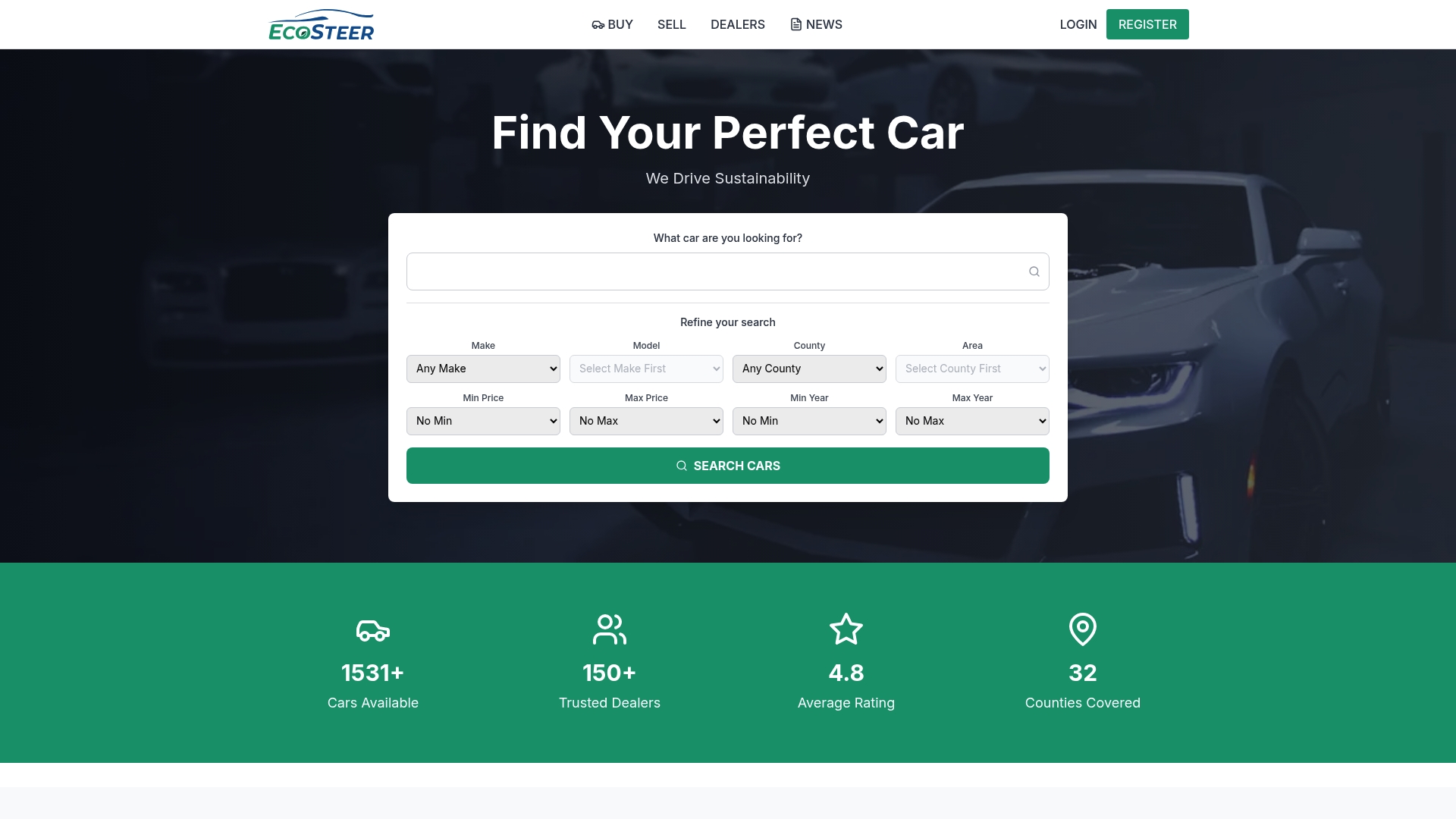
Because Ecosteer’s dealer directory verifies who you’re buying from, you go into the insurance conversation with clean paperwork and none of the last-minute scrambling that trips up buyers collecting a car with no documents in hand. Search live listings on Ecosteer’s car marketplace today, shortlist a few vehicles, and check their running costs before you request your first quote.
Sources
- Central Bank of Ireland — What information do I need to provide when buying insurance?
- Gov
- Dolmen Insurance — Comparing car insurance
- AIG Ireland — Car Insurance
FAQ
Who is the cheapest for car insurance in Ireland?
There’s no single cheapest insurer for everyone, since premiums depend on your individual risk profile, so the most reliable way to find the lowest price is comparing quotes across several insurers or through a broker rather than trusting one name.
Can I insure a car that is not in my name in Ireland?
Yes, but you must disclose the actual registered owner and your relationship to the vehicle, and the insurer will assess the policy accordingly rather than treating you as the default owner.
What is the cheapest way to buy car insurance?
Comparing quotes across a wide panel, choosing a higher voluntary excess where affordable, and using telematics if you’re a new driver are the most consistent ways to lower your premium, alongside checking for online and multi-policy discounts.
Can I insure a car if I don’t own it?
Yes, insurers do offer cover to named drivers or those with permission to use a car they don’t own, though the Driving of Other Cars benefit is often more limited than assumed, so always confirm the exact terms with the insurer before you drive it.
Recommended
Ecosteer Editorial
Author